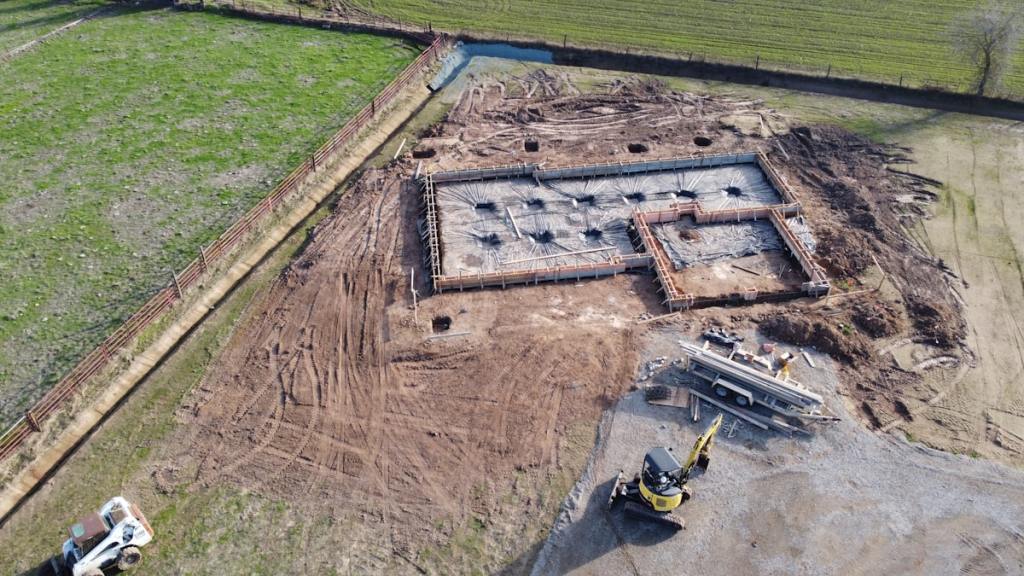
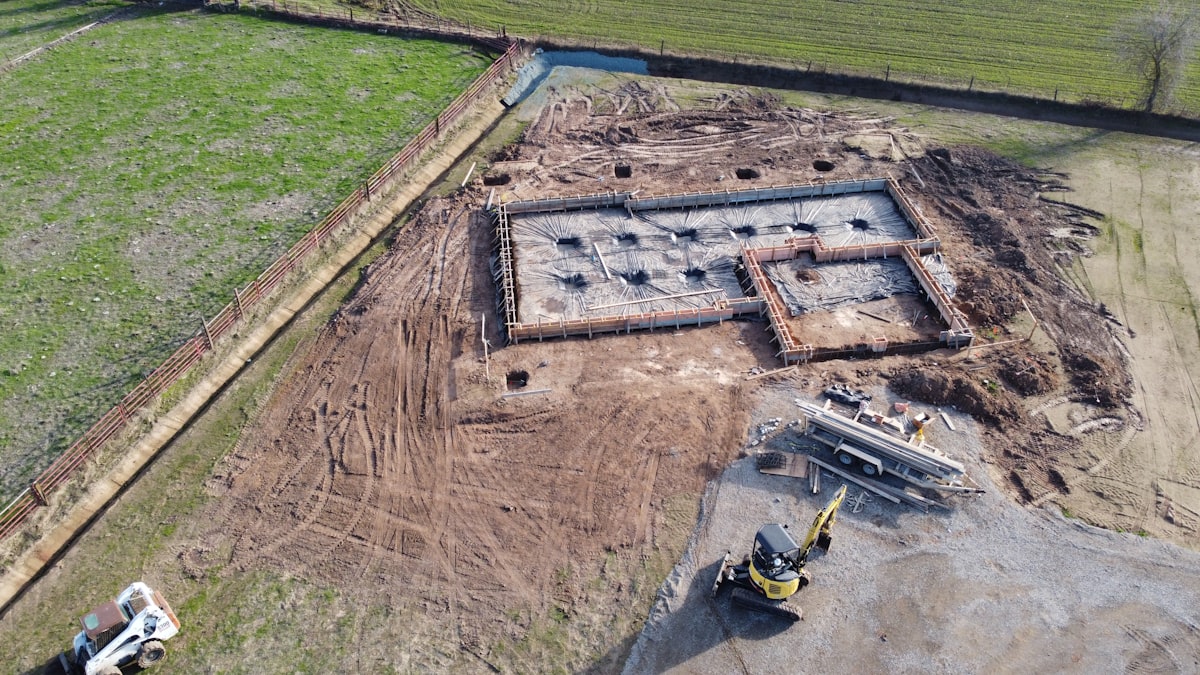
Geotechnical engineering is a branch of civil engineering concerned with understanding the behaviour of earth materials — soils, rocks, and groundwater — and applying that understanding to the design and construction of infrastructure. Whether a building sits on firm ground or soft clay, whether a slope will hold or collapse, whether a foundation will settle over time: these are geotechnical questions.
It is a discipline that sits quietly at the heart of almost every construction project, yet it remains one of the least understood by those outside the profession. This post is the first in the Back to Basics series, designed to give practitioners, students, and curious observers a thorough grounding in what geotechnical engineering actually is, what it involves, and why it matters so profoundly to the built environment.
The Ground Beneath Our Feet
Every structure we build ultimately rests on — or within — the ground. Roads, bridges, dams, tunnels, skyscrapers, wind turbines, offshore platforms: all of them interact with the earth in ways that must be understood, quantified, and designed for. Yet the ground is not a passive, uniform medium. It is complex, variable, and often unpredictable. It has been shaped by millions of years of geological processes: deposition, erosion, volcanic activity, glaciation, and chemical weathering. What lies beneath the surface can change dramatically over very short distances, and it rarely behaves the way a simple model would suggest.
Geotechnical engineering emerged as a formal discipline in the early twentieth century largely out of necessity. As urbanisation accelerated and infrastructure demands grew, engineers began to encounter problems that classical structural analysis could not solve. Foundations sank. Embankments failed. Tunnels flooded. Retaining walls moved. These failures were expensive, sometimes fatal, and almost always preventable — if only the ground had been properly understood beforehand.
Karl Terzaghi and the Birth of Soil Mechanics
The foundations of modern geotechnical engineering are inseparable from the work of Karl Terzaghi, an Austrian engineer who is widely regarded as the father of soil mechanics. In his landmark 1925 publication Erdbaumechanik auf bodenphysikalischer Grundlage, Terzaghi set out a theoretical framework for understanding how soils behave under load, how water moves through them, and how pore water pressure affects effective stress. His effective stress principle — arguably the single most important concept in geotechnical engineering — explains that the mechanical behaviour of a saturated soil is governed not by the total stress applied, but by the difference between total stress and pore water pressure.
This insight unlocked our ability to analyse consolidation, shear strength, and permeability. These concepts remain central to geotechnical practice today, nearly a century after they were first formalised. Terzaghi was also instrumental in developing field investigation techniques and in training generations of engineers who would carry his ideas around the world.
What Does a Geotechnical Engineer Actually Do?
At its core, geotechnical engineering involves characterising the ground at a specific site and using that characterisation to inform safe, economical, and sustainable design. This work spans a remarkably wide range of activities and scales — from a small residential extension requiring a few trial pits to a major infrastructure programme involving hundreds of boreholes, laboratory tests, and numerical analyses.
A geotechnical engineer might spend one week reviewing historical maps and borehole records for a proposed development site, and the next supervising drilling operations on a challenging urban site surrounded by live utilities and existing structures. They might assess the risk of slope failure on a cutting alongside a railway line, design a retaining structure to hold back saturated fill, or advise on the most appropriate type of foundation for a tall building on a site underlain by compressible soft clay.
The work typically progresses through several phases: desk study, ground investigation, laboratory testing, geotechnical interpretation and reporting, and design. Each phase informs the next, and the quality of the final design is directly dependent on the quality of the investigation and interpretation that preceded it. This is why cutting corners on ground investigation — something that happens all too frequently under commercial pressure — can have severe consequences later in a project.
The Key Subfields of Geotechnical Engineering
Foundation engineering is concerned with the design of foundations that safely transfer structural loads into the ground. This encompasses shallow foundations such as strip, pad, and raft foundations, as well as deep foundations such as piles and caissons. Foundation design requires an understanding of bearing capacity — the maximum load per unit area the ground can support without failing — and settlement — the amount by which the foundation and the structure it supports will move over time.
Slope stability involves assessing the safety of natural and engineered slopes. Whether it is a highway cutting, an embankment, a dam, or a coastal cliff, any sloped ground surface has a potential failure mechanism. Geotechnical engineers use limit equilibrium methods, numerical modelling, and field monitoring to assess the factor of safety of slopes and to design stabilisation measures when needed.
Retaining structures encompass a range of engineered systems designed to hold back soil or rock at changes in ground level. Sheet piles, contiguous bored pile walls, secant pile walls, diaphragm walls, and gravity retaining walls all fall within this category. Designing them requires understanding earth pressure theory, the effects of water, and the behaviour of both the structure and the retained ground.
Ground improvement techniques are used when the natural ground conditions are inadequate for the proposed loading. Dynamic compaction, vibro-compaction, stone columns, preloading, grouting, and deep soil mixing are among the methods available. Ground improvement is often more cost-effective than relocating a project or using very deep foundations.
Tunnelling and underground engineering presents some of the most complex geotechnical challenges, involving the interaction between the excavation process, the surrounding ground, and the support system. Environmental geotechnics addresses the interaction between the ground and contaminants, including the containment of waste and remediation of contaminated land.
The Inherent Uncertainty in Geotechnical Engineering
One of the most important — and perhaps counterintuitive — characteristics of geotechnical engineering is that it is a discipline defined by uncertainty. Unlike structural engineering, where the properties of steel or concrete can be specified and controlled, soil and rock are natural materials whose properties vary spatially in ways that can never be fully characterised. We can drill boreholes, but we can only sample a tiny fraction of the ground volume beneath a site. We can test samples in a laboratory, but laboratory conditions are never a perfect representation of the in-situ environment.
This means that geotechnical engineering is as much about judgement and experience as it is about calculation. The Eurocode framework — specifically Eurocode 7, which governs geotechnical design in Europe — recognises this explicitly through its concept of the Observational Method. This approach allows designs to be adapted during construction as more information about actual ground conditions becomes available. This acceptance of uncertainty, and the formal framework for managing it, is one of the features that distinguishes geotechnical engineering from many other engineering disciplines.
Why Geotechnical Engineering Matters
The consequences of getting geotechnics wrong can be severe. History is littered with examples of failures that resulted from inadequate ground investigation, poor interpretation of ground conditions, or inappropriate design decisions. The Vajont Dam disaster of 1963, in which a landslide into the reservoir caused a wave that killed nearly 2,000 people, was fundamentally a geotechnical failure. The Leaning Tower of Pisa owes its famous tilt to differential settlement in the soft alluvial soils beneath its foundation — a problem that would have been identified and mitigated by modern geotechnical investigation. In the UK alone, the cost of unforeseen ground conditions on construction projects runs to hundreds of millions of pounds each year.
Conversely, excellent geotechnical engineering saves money as well as lives. A thorough ground investigation that costs a few tens of thousands of pounds can identify problems that, if undetected, might cost millions to rectify during construction. A well-designed foundation, calibrated to the actual ground conditions rather than conservative assumptions, can be significantly cheaper than an over-designed one.
Geotechnical Engineering in the UK Context
In the United Kingdom, geotechnical engineering is governed primarily by Eurocode 7 (BS EN 1997), which sets out the principles and application rules for geotechnical design. The UK has its own National Annex that modifies certain aspects of the Eurocode for domestic practice. Ground investigation is typically carried out in accordance with BS EN ISO 22475 and reported in accordance with the Eurocode 7 ground investigation report requirements.
The Site Investigation Steering Group produced a series of influential guidance documents in the 1990s that remain widely referenced in UK practice. More recently, the development of the Ground Investigation Specification and the widespread adoption of the AGS data format for electronic data transfer have significantly improved the consistency and quality of ground investigation practice across the industry.
Professional bodies including the British Geotechnical Association, the Geological Society of London, and the Institution of Civil Engineers all play important roles in developing and disseminating best practice in UK geotechnical engineering. Membership and chartership through these bodies is an important marker of professional competence for practising geotechnical engineers.
Looking Ahead in This Series
This Back to Basics series will work through the core elements of geotechnical engineering in a logical sequence. From the geological principles that underpin our understanding of ground materials, through the processes of desk study, ground investigation, laboratory testing, and design, we will build up a comprehensive picture of how modern geotechnical practice works. Whether you are a student just beginning to engage with the subject, a practitioner looking to refresh your understanding, or a project manager trying to make sense of geotechnical reports, this series is designed to be accessible, rigorous, and practically useful.
Geotechnical engineering is, at its heart, about understanding the most fundamental material on earth — the ground itself. It is a discipline that demands intellectual curiosity, careful observation, sound engineering judgement, and a healthy respect for the complexity of the natural world. It is also, for those who practise it, one of the most rewarding branches of engineering there is.


Leave a Reply