
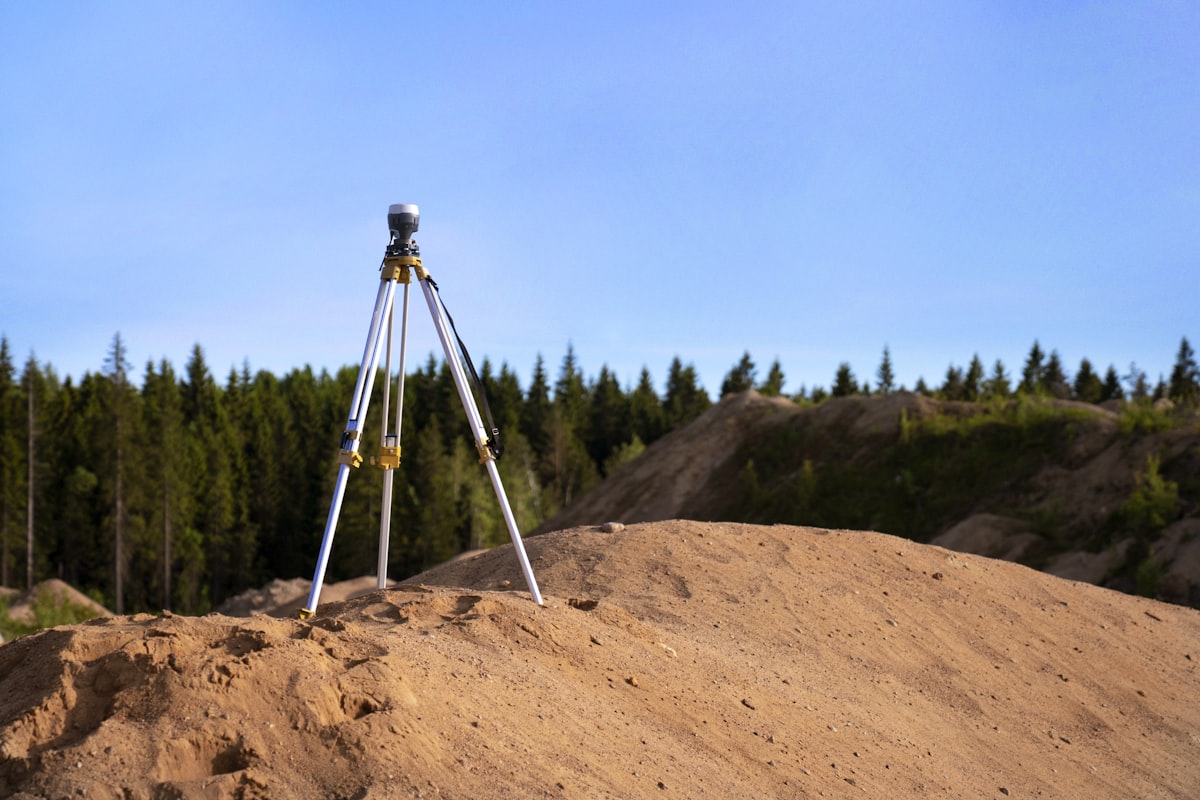
One of the most consequential decisions in any ground investigation programme is also one of the least discussed: the choice of investigation method. Get it right, and the investigation will deliver the information needed for design efficiently and within budget. Get it wrong, and the result may be an investigation that is expensive, incomplete, or — in the worst case — misleading. Understanding how to match the investigation method to the site conditions, the design requirements, the available budget, and the physical constraints of the site is a core competency for any geotechnical practitioner.
There is no single “correct” investigation method for all circumstances. Every site is different, every project has different information requirements, and every budget has different constraints. The skill lies in understanding the capabilities and limitations of the available methods and making an informed, defensible choice that is proportionate to the risk and complexity of the project. This post works through the principal factors that should influence the choice of investigation method, with particular reference to the methods most commonly used in UK practice.
Cost vs Information: Getting the Balance Right
Every investigation method involves a trade-off between cost and information. Some methods are cheap but provide limited or indirect information; others are expensive but deliver rich, high-quality data. Selecting the right method requires a clear understanding of what information is actually needed — and, critically, what level of uncertainty in that information is acceptable for the design decisions that will be based on it.
Dynamic probing, for example, is one of the cheapest investigation methods available: a simple, portable rig can drive a cone into the ground at a rate of several metres per hour, providing a continuous record of penetration resistance at a fraction of the cost of a borehole. But dynamic probing provides no samples, no direct information about the nature of the materials encountered, and limited quantitative engineering data. It is excellent for rapid site reconnaissance, for assessing the variability of ground conditions across a site, and for confirming the consistency of conditions between more informative investigation points — but it cannot substitute for boreholes or trial pits where samples and direct observation are required.
At the other extreme, advanced in-situ tests such as the self-boring pressuremeter or the flat dilatometer provide high-quality measurements of in-situ stress and stiffness that cannot be obtained any other way — but they are expensive, slow, and require specialist equipment and expertise to operate and interpret. They are justified for major projects where accurate stiffness parameters are critical to design, but they would be disproportionate for a routine building investigation.
The key principle is proportionality: the cost of the investigation should be commensurate with the value of the information it provides, and the value of that information is measured by its influence on the design. An investigation that reduces design uncertainty enough to allow a smaller or simpler foundation type, or to avoid unnecessary conservatism in the design parameters, can pay for itself many times over in construction cost savings. A more expensive investigation method is justified whenever the additional information it provides leads to a materially better design decision.
Access Constraints
Physical access is often the most immediate and practical constraint on the choice of investigation method. Investigation rigs range enormously in size and weight — from compact, track-mounted mini-rigs that can pass through a standard domestic doorway and operate in gardens and basements, to large truck-mounted rotary rigs that require unrestricted vehicle access and a firm, level working platform. The choice of rig must be matched to the site conditions: what access routes are available, what overhead clearance exists, what ground-bearing capacity is available for the rig and its ancillary equipment.
Urban sites present particular access challenges. Congested roads, narrow entrances, overhead powerlines, adjacent structures, and the presence of underground services all constrain what is possible. On constrained urban sites, mini-rigs are often the only practical option for borehole investigation, even where a larger rig might be technically preferable. Their smaller size and lower weight also reduce the risk of damage to existing surfaces and structures. However, mini-rigs typically have less powerful percussive capacity and may struggle to penetrate hard strata or reach the depths required for some investigations.
Trial pitting with a tracked hydraulic excavator requires good vehicle access and sufficient working space around each pit. Where access is restricted, hand-dug pits are an alternative for shallow investigations, though they are slower and more expensive per metre depth. For sites with no vehicle access at all — remote moorland, steep slopes, confined basement areas — investigation options may be limited to portable dynamic probing, hand auger boring, or geophysical methods, all of which have significant limitations in terms of the information they can provide.
Overhead and underground constraints must be identified through a utility search and visual inspection before any fieldwork begins. Working near overhead powerlines requires risk assessment and may require the lines to be made dead. Working near underground services requires the use of cable avoidance tools (CAT and Genny) and careful hand-digging to confirm the position of services before the main investigation method is deployed. These constraints can significantly influence both the choice of method and the time required to complete the investigation.
Soil Type and the Choice of Method
The nature of the ground itself is one of the most important determinants of the appropriate investigation method. Different soil types present very different challenges for sampling, testing, and in-situ measurement, and the method that works well in one material may be wholly inadequate in another.
In soft cohesive soils — soft clays and silts — the priority is typically to obtain good-quality undisturbed samples for laboratory strength and stiffness testing. The standard approach in the UK is to use thin-walled tube samplers (100 mm diameter U100 tubes) in cable percussion boreholes. These samplers are pushed into the soil at the base of the borehole, using the weight of the drill rods rather than hammer-driving, to minimise disturbance. For very soft or sensitive soils, piston samplers or block sampling may be needed to achieve adequate sample quality. The SPT is of limited value in very soft clays (the N-value is typically very low and not well correlated with strength), but the undrained shear strength can be estimated from a field vane test, which measures the torque required to rotate a four-bladed vane in the soil.
In stiff clays, the U100 tube sampler works well, and the SPT provides a useful index of relative stiffness. In very stiff or hard clays — such as London Clay or weathered glacial till — the U100 may not penetrate without hammer-driving, which can result in significant sample disturbance. In these conditions, rotary core sampling may be needed to obtain undisturbed samples. The SPT N-values in stiff clays are generally well correlated with undrained shear strength and are widely used in foundation design.
In granular soils — sands and gravels — undisturbed sampling is generally not possible: the grains rearrange during sampling and the in-situ fabric is lost. The SPT is the principal test used in sands and gravels in UK practice, providing a direct measure of relative density that can be used to estimate bearing capacity and settlement. The CPT is an excellent alternative in sands, providing a continuous profile of cone resistance and friction ratio that gives very detailed information about stratigraphy and relative density. Bulk samples of granular material can be collected for particle size distribution and compaction testing, but the in-situ strength and stiffness parameters must be determined from in-situ tests or from correlations with index properties.
Made ground and fill present particular challenges, because their composition and properties can be highly variable — both laterally and vertically — and because they may contain demolition rubble, chemical contamination, or other hazardous materials. Trial pitting is often the most appropriate method for investigating made ground, because it exposes a large area for direct inspection and description. Dynamic probing can be used to assess the variability and relative consistency of fill across a site quickly and cheaply. Where the fill is thick or where contamination assessment is required, boreholes may be needed to reach greater depths or to collect specific sample types for chemical testing.
Rock Investigations
Ground investigations in rock present a distinct set of challenges that require different methods from those used in soil. In particular, the engineering behaviour of a rock mass is controlled not just by the intact rock properties but by the characteristics of the discontinuities — joints, faults, bedding planes, and other structural features — that subdivide the rock into blocks. Understanding the rock mass therefore requires both characterisation of the intact rock material and mapping of the discontinuity network.
Rotary coring is the primary method for rock investigation. A rotating diamond-tipped core barrel cuts a cylindrical core of rock from the base of the borehole, which is then recovered to the surface for inspection and testing. The key indicators of rock quality derived from rotary cores are the total core recovery (TCR), the solid core recovery (SCR), and the Rock Quality Designation (RQD). The RQD — the percentage of the core run consisting of intact pieces 100 mm or longer — is a widely used empirical indicator of rock mass quality that correlates with parameters used in geomechanical classification systems such as RMR and Q.
The condition of the borehole can also be assessed using geophysical borehole logging, which provides continuous measurement of physical properties — density, electrical resistivity, acoustic velocity, caliper — along the borehole wall. Borehole televiewers (optical or acoustic) produce high-resolution images of the borehole wall that allow discontinuities to be identified and their orientation measured. These tools can be particularly valuable in rock investigations where core recovery is poor, or where the orientation of discontinuities is needed for stability analysis.
For surface rock outcrops and excavated faces, detailed discontinuity mapping — recording the orientation, spacing, persistence, roughness, and infilling of joints and other features — can provide important input to geomechanical analysis. Photogrammetry and laser scanning (LiDAR) are increasingly used to capture high-resolution three-dimensional models of rock faces, from which discontinuity data can be extracted systematically and efficiently.
Groundwater Considerations
Groundwater conditions can have a profound influence on both the choice of investigation method and the practicalities of carrying out the investigation. High groundwater levels can cause borehole instability in cohesionless soils, requiring the use of temporary casing or drilling fluid to support the borehole walls. Artesian conditions — where the groundwater pressure is sufficient to push water up above the ground surface — can make drilling both hazardous and difficult to control. Perched water tables, where water is held above the main water table by an impermeable layer, can cause unexpected groundwater ingress in trial pits and boreholes, requiring pumping to maintain safe working conditions.
The monitoring of groundwater conditions is itself an important part of the investigation. Standpipe piezometers installed in boreholes allow the depth to the water table to be measured at rest, after the effects of drilling have dissipated. Piezocones (CPTu) measure pore water pressure continuously during penetration and during dissipation periods, providing information about both the in-situ pore pressure and the permeability of the soil. Pumping tests — in which water is pumped from a borehole at a controlled rate while the response of the water table in observation boreholes is monitored — can provide quantitative measurements of hydraulic conductivity that are needed for dewatering design, seepage analysis, and groundwater risk assessment.
In contaminated land investigations, the chemical quality of groundwater is often as important as its hydraulic behaviour. Groundwater samples must be collected from dedicated monitoring wells using appropriate sampling protocols to minimise the risk of cross-contamination and to ensure that the sample is representative of the groundwater in the formation, not of water that has been standing in the casing or borehole for an extended period. Low-flow sampling, in which water is pumped slowly from the well at a rate that minimises disturbance to the groundwater, is the preferred approach where sample quality is critical.
Making the Decision
In practice, most Phase 2 investigations use a combination of methods rather than a single approach. The combination is chosen to make the most efficient use of the available budget while ensuring that the critical information requirements are met. A typical investigation for a medium-sized building project in the UK might include: cable percussion boreholes to characterise the principal soil units and obtain samples for laboratory testing, trial pits to assess the nature and variability of shallow made ground, dynamic probing to assess lateral variability between borehole points, SPT testing in boreholes to provide in-situ strength and stiffness indices, and standpipe piezometers to monitor groundwater levels.
The decision about which methods to use, and in what combination, should be documented in the investigation specification and justified by reference to the site conditions, the information requirements, and the constraints identified during the desk study. It should be reviewed in light of what is actually found during the investigation: if early findings reveal unexpected ground conditions, the investigation plan should be adapted accordingly. A good investigation is not a rigid execution of a pre-determined plan but a responsive programme that uses each new piece of information to guide the next step.
Ultimately, the choice of investigation method is an exercise in professional judgement, informed by experience, knowledge of the available methods, and a thorough understanding of the site and the project requirements. There is rarely a single correct answer, but there are often poor answers — methods that are inadequate for the ground conditions, disproportionate to the project scale, or incompatible with the site constraints. Avoiding those poor choices, and making well-reasoned, well-documented decisions about investigation methods, is one of the hallmarks of competent geotechnical practice.


Leave a Reply