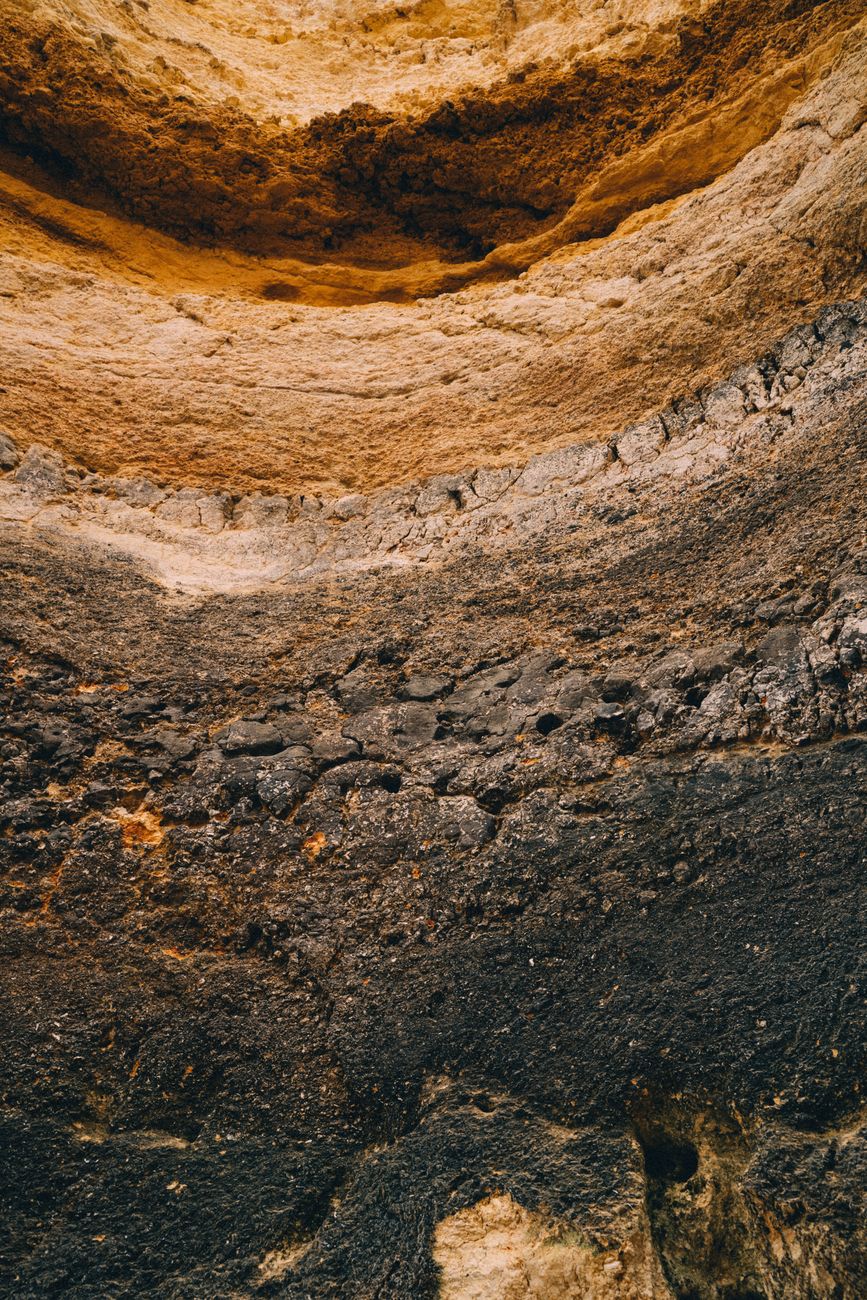
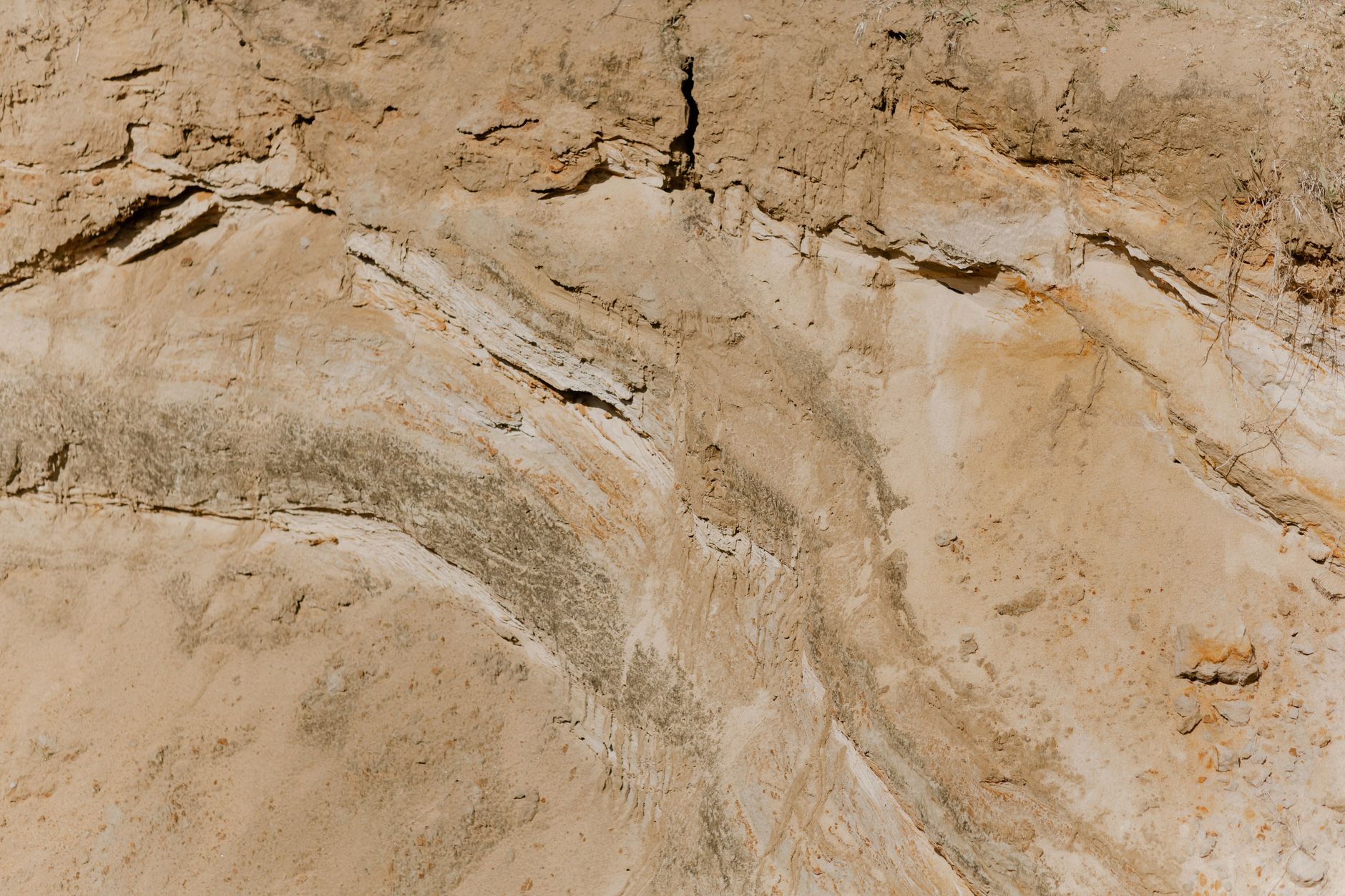
Soil classification is the language of geotechnical engineering. Before a ground investigation can be interpreted, before a ground model can be built, and before any design can proceed, the materials encountered must be identified and described in a consistent and reproducible way. The classification of soils according to their particle size, mineralogy, and plasticity is the foundation on which all subsequent geotechnical work rests. In the United Kingdom, soil classification follows the framework established in BS 5930:2015, supplemented by BS EN ISO 14688 for European alignment. Understanding the classification system — what each soil type is, how it behaves, and why it matters — is essential knowledge for anyone working in ground engineering.
Soils are classified primarily by particle size, since particle size exerts a dominant influence on engineering behaviour: drainage rate, compressibility, shear strength, susceptibility to frost, and behaviour during compaction all depend fundamentally on whether the soil is coarse-grained or fine-grained, and on the distribution of particle sizes within the material. The principal classification terms — clay, silt, sand, gravel, cobbles, and boulders — each describe a specific particle size range and carry with them a set of implied engineering properties that are well understood across the profession. Organic soils form a special category whose behaviour is dominated by their organic content rather than their particle size, and which require separate consideration.
Clay
Clay is the finest-grained mineral soil, with particles smaller than 0.002 mm (2 micrometres) in diameter. But clay is more than just a particle size classification: the clay fraction consists of platy phyllosilicate minerals — primarily kaolinite, illite, and smectite (including montmorillonite) — whose flat, layered crystal structure and large surface area relative to their volume give them properties that are fundamentally different from those of larger mineral particles. Clay particles carry a net negative surface charge, which means they attract water molecules and cations from the surrounding pore water, forming adsorbed water layers that profoundly affect the behaviour of the soil.
The engineering consequences of clay mineralogy are significant. Clays are cohesive — they have significant undrained shear strength even without applied confining pressure, because the adsorbed water layers and electrostatic forces between particles resist separation. They are plastic — they can be deformed without cracking over a range of moisture contents, and they exhibit the Atterberg limit behaviour that is used to characterise and classify them. They are compressible — the platey particles can rearrange under load, and the consolidation of clays under applied stress is a time-dependent process that can take months or years in thick deposits. They are largely impermeable — water movement through clay is very slow, which means drainage is slow and excess pore water pressures generated by loading dissipate slowly.
In the UK, clays are amongst the most commonly encountered engineering soils, including London Clay, Lias Clay, Mercia Mudstone (weathered), Gault Clay, Oxford Clay, and the various Quaternary clays deposited by glacial and lacustrine processes. Each has characteristic geotechnical properties that reflect its geological history: the stress history (whether overconsolidated or normally consolidated), the clay mineralogy, the depositional environment, and any subsequent alteration. London Clay, for example, is heavily overconsolidated, fissured, and shows marked anisotropy due to its depositional fabric — all of which have important implications for slope stability, retaining wall design, and foundation settlement.
Silt
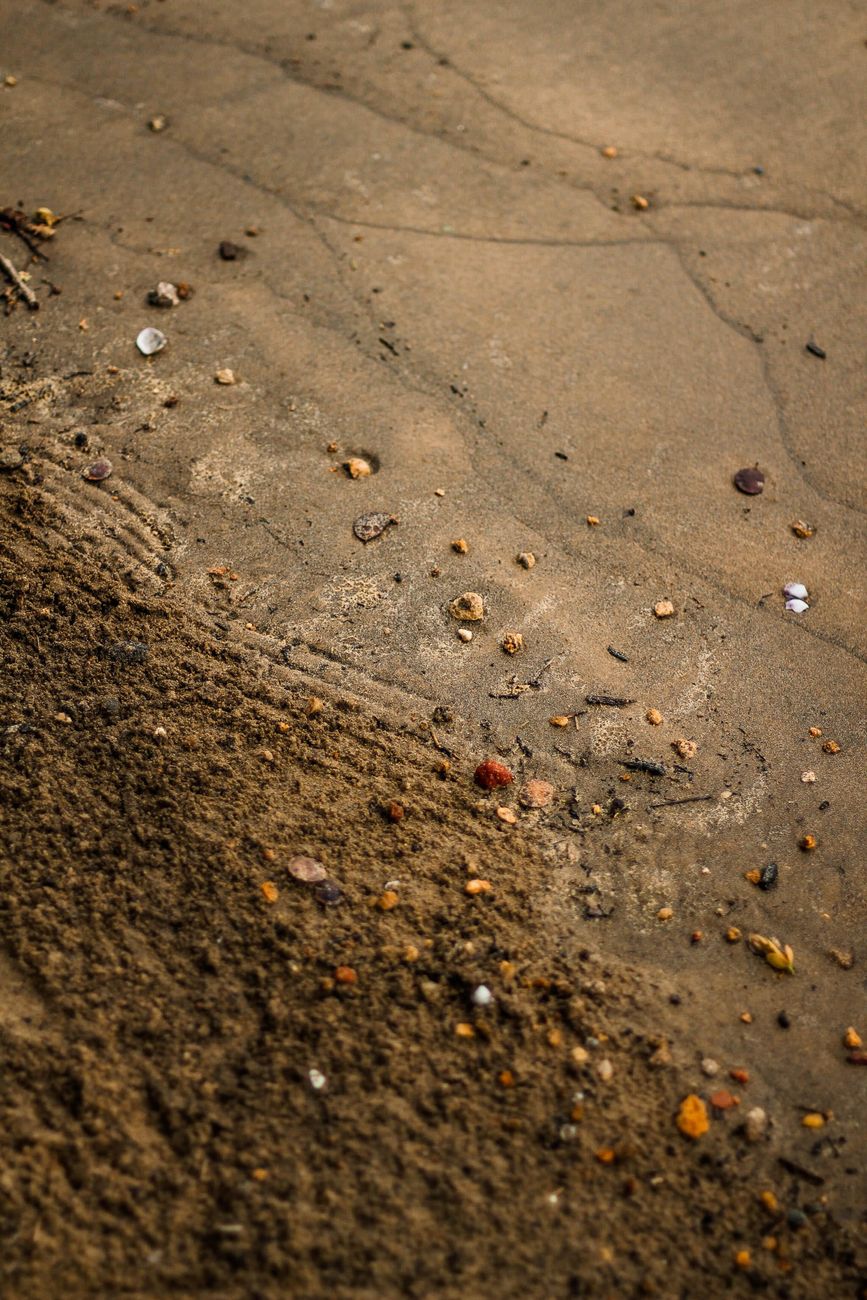
Silt occupies the particle size range between clay and sand: 0.002 mm to 0.063 mm in BS 5930:2015. Silt particles are too large to carry a significant surface charge and too small to behave purely as frictional granular particles. The result is a material with intermediate and often problematic engineering properties. Silts have low to no plasticity, meaning they cannot be rolled into threads and lack the cohesion of clays. In the field, silts are identified by their dilatancy (water appears at the surface when a wet silt pat is squeezed), their low dry strength (a dry silt pat crumbles easily), and their silky or smooth feel when rubbed between fingers.
Silts are notoriously difficult engineering materials. They are susceptible to frost heave — water migrates through silt by capillary action towards the freezing front, where it forms ice lenses that disrupt the soil structure. They are prone to liquefaction under dynamic or vibratory loading, particularly when loose and saturated: the soil structure collapses, excess pore pressures build up, and the material loses essentially all its strength. They are difficult to compact effectively, because they are sensitive to moisture content and tend to become unstable when wet. Fine silts and silty fine sands in estuarine environments are sometimes described as “running silt” because they flow like a liquid when disturbed, creating significant challenges for excavation and tunnelling.
In the UK, silts are commonly encountered in alluvial floodplain deposits, in estuarine and tidal flat sediments, and in glacial lake (lacustrine) deposits. Loess — wind-blown silt deposited during periglacial periods — is less common in the UK than in continental Europe but does occur in parts of eastern England. The characteristic engineering challenges of silts — frost susceptibility, poor drainage, instability when wet — mean that they require careful management in construction, particularly for earthworks and foundations on or in shallow fill or alluvial deposits.
Sand
Sand comprises particles in the size range 0.063 mm to 2 mm. Unlike clays and silts, sand particles are essentially non-plastic: they have no cohesion, no plasticity, and no significant surface charge effects. Their engineering behaviour is dominated by friction between particles and by the geometry of the particle packing. The shear strength of sand is characterised by an angle of internal friction (typically 28° to 45°, depending on relative density, particle shape, and mineralogy), with no cohesion intercept. Sand is freely draining: water drains rapidly through sandy soils, excess pore pressures dissipate quickly under loading, and the effective stress and drained behaviour are almost always the relevant design conditions.
The engineering properties of sand depend strongly on its relative density — the degree to which it is packed relative to its loosest and densest possible states. Loose sands are compressible, have lower friction angles, and are susceptible to liquefaction under cyclic loading. Dense sands are stiff, have higher friction angles, and exhibit dilatancy — they expand when sheared, generating negative pore pressures that temporarily increase their strength. The relative density of sand in the ground is assessed from in-situ tests, particularly the Standard Penetration Test (SPT), whose N-value is one of the most widely used correlations in geotechnical engineering.
Sands in the UK range from the fine, uniform sands of aeolian or coastal origin (such as the Folkestone Beds or the dune sands of coastal areas) to the coarser, more variable fluvioglacial sands and gravels of glacial outwash deposits. The practical engineering challenges of sand include the risk of piping and internal erosion in earth dams and embankments, the potential for liquefaction in seismically active areas or under vibration from construction activities, and the need for temporary support of excavations in saturated sands below the water table — running sand is one of the most challenging materials for trench and foundation excavation.
Gravel
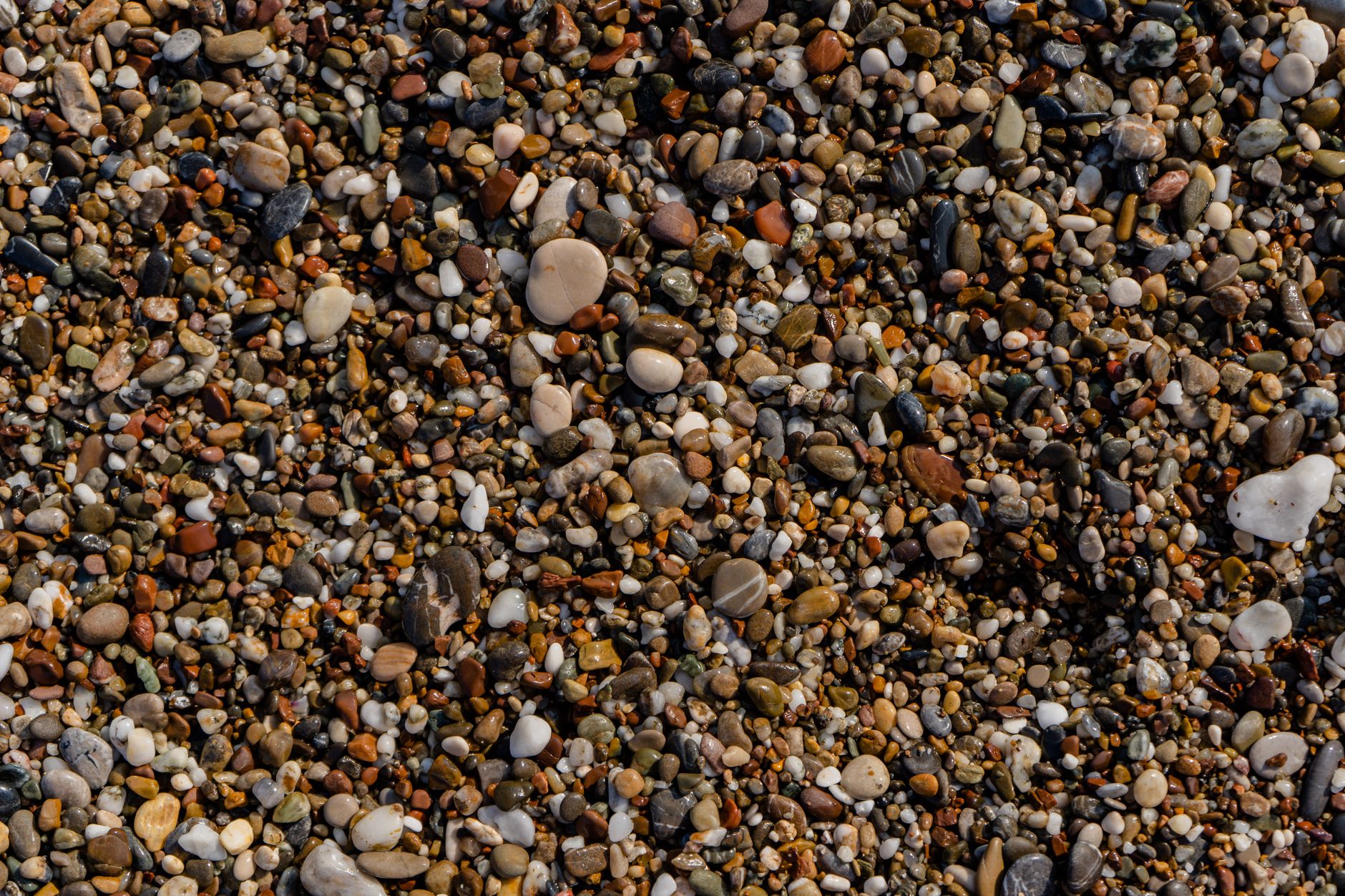
Gravel comprises particles in the size range 2 mm to 60 mm. Like sand, gravel is a coarse-grained, non-plastic, frictional material, but the larger particle size means that its engineering properties are governed even more strongly by particle interlocking, particle shape (angular versus rounded), and the nature of any finer matrix material filling the voids between the larger particles. Well-graded gravels — those with a wide distribution of particle sizes from fine to coarse — are generally denser, stiffer, and stronger than poorly graded (uniform) gravels, because the smaller particles fill the voids between the larger ones, increasing the density of packing.
Gravels are generally excellent engineering materials for foundations, fill, and road construction. They are strong, stiff, freely draining, and not susceptible to frost heave (though gravels with a significant silt or clay fines content can be frost-susceptible). River terraces and glacial outwash deposits of sand and gravel form some of the most commonly exploited construction aggregate resources in the UK, as well as some of the most common geological formations encountered in ground investigations for infrastructure projects. The gravel deposits beneath London, for instance — the Kempton Park Gravel, the Taplow Gravel, and other terrace gravels — are a familiar feature of ground investigations along the Thames valley.
In ground investigations, gravels present particular challenges for sampling and testing: standard U100 tube samplers cannot penetrate gravel, and dynamic sampling techniques produce disturbed samples from which laboratory tests on intact specimens cannot be obtained. Assessment of gravel properties therefore relies heavily on in-situ testing — particularly the SPT and the Becker Penetration Test — and on index properties determined from bulk samples. The presence of gravel also makes drilling more difficult and expensive, as it can deflect or block drilling tools and reduce core recovery from rotary boreholes.
Cobbles
Cobbles occupy the particle size range 60 mm to 200 mm. They are too large to be included in standard laboratory grading tests (which typically accommodate particles up to 63 mm or 37.5 mm, depending on the test method), and their presence in a deposit must be assessed by observation in the field — from the composition of the borehole spoil, from the response of the drilling tools, or from direct observation in trial pits or natural exposures. Cobbles are typically derived from the physical breakdown of larger rock fragments by river transport, glacial erosion, or coastal wave action, and they often occur mixed with gravels and boulders in coarse fluvial, glacial, or coastal deposits.
From an engineering perspective, cobbles are generally beneficial when present as the dominant particle size in a well-compacted deposit: they contribute to very high shear strength and stiffness. However, their presence complicates construction operations significantly. They are difficult to excavate with conventional plant, requiring hydraulic breakers or blasting in some cases. They obstruct driven piles and sheet piles. They are problematic for pipe-laying in trenches. And they make the logging and sampling of boreholes difficult, as they can cause refusal of drilling tools and produce very low or zero core recovery in rotary coring operations. The presence of cobbles in a deposit should always be clearly noted in borehole logs and investigation reports.
Boulders
Boulders are defined as particles larger than 200 mm in diameter. In geological and engineering practice, the term “boulder” typically refers to large, rounded or sub-rounded rock fragments, commonly of glacial origin, that have been transported and deposited by ice or meltwater. In the UK, glacial boulders — erratics transported from distant source areas by ice sheets during the Pleistocene glaciations — are a characteristic feature of till (boulder clay) deposits across much of northern and central England, Scotland, and Wales. They can range in size from just above the cobble limit to several metres across, and their presence is one of the most significant engineering hazards in glacial ground.
The engineering significance of boulders is primarily a function of their unexpectedness. In a borehole log, a boulder may produce a zone of apparent rock or high-resistance material that gives a misleading impression of the ground conditions. A driven pile may encounter a boulder and be deflected or damaged. An excavation may encounter a large boulder that is physically impossible to remove without blasting or specialist plant. The statistical distribution of boulders within a till matrix is inherently unpredictable from borehole data alone, because the spacing between boreholes is typically much larger than the boulders themselves, meaning that many boulders will be missed entirely by conventional investigation. Supplementary methods such as ground radar or seismic surveys can help to identify the presence of a bouldery ground profile, but they cannot reliably characterise individual boulders.
Organic Soils
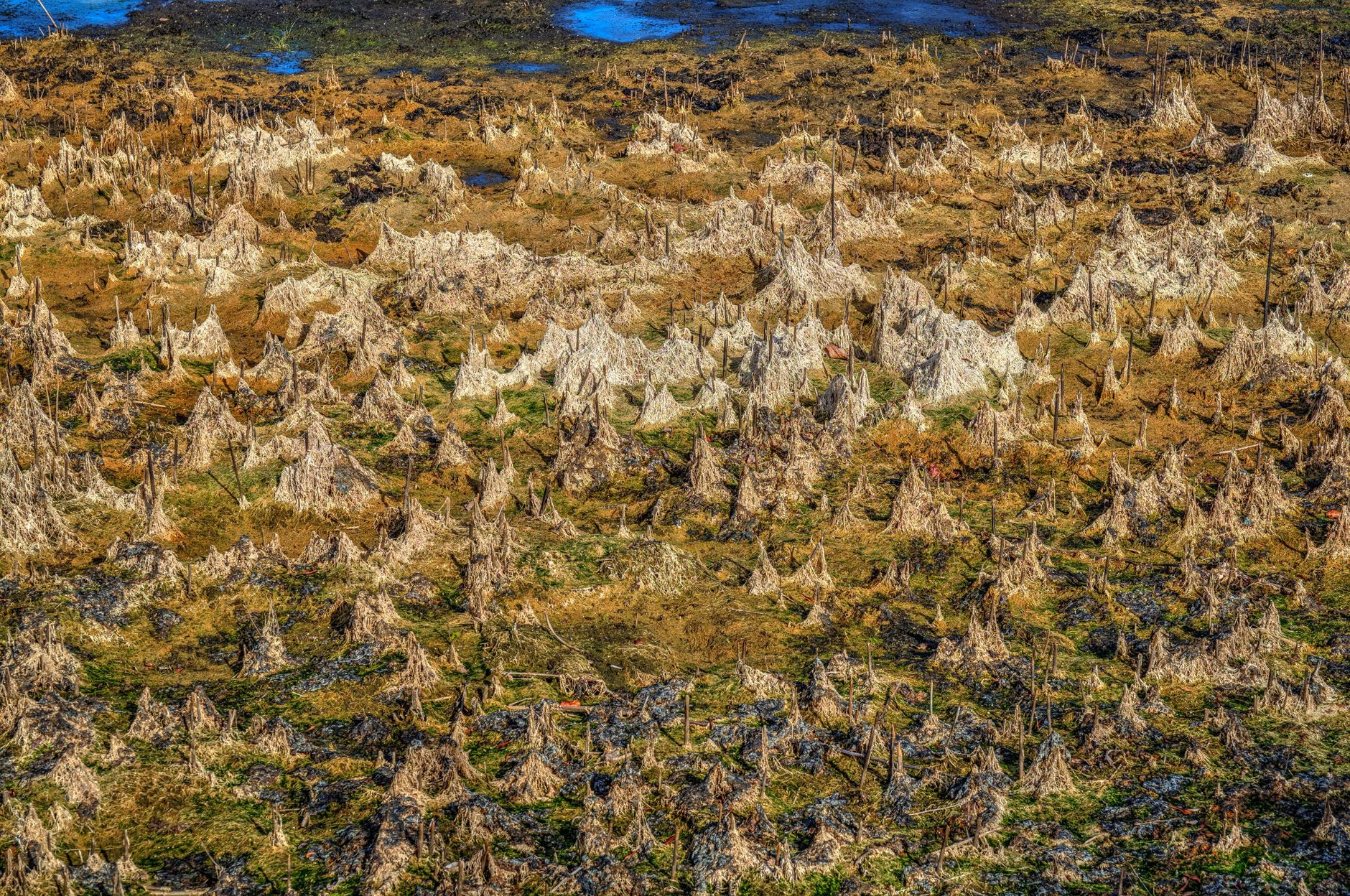
Organic soils are defined by their organic content rather than their particle size. BS 5930:2015 distinguishes between slightly organic soils (organic content less than approximately 2%), organic soils (organic content 2% to approximately 20%), and peat (organic content greater than approximately 20%). Peat is the most extreme form of organic soil, consisting largely of partially decomposed plant material, and is typically dark brown to black in colour, fibrous or amorphous in texture, and has a characteristic smell of decomposition. It is one of the most challenging engineering materials, and its presence on a site has profound implications for foundation design, earthworks, and environmental risk.
The engineering properties of organic soils are dominated by their organic content. Peat has very high water content (often 300% to 1000% or more by dry mass), very low strength, very high compressibility, and very low permeability when saturated (despite the intuitive expectation that a fibrous material should drain freely). Peat settlements under load are large, long-term, and often non-uniform, making it almost impossible to support conventional foundations on untreated peat without unacceptable settlement. Organic materials also have a significant gas content — methane and carbon dioxide produced by microbial decomposition — which can create ground gas hazards in construction. They are chemically aggressive and can attack concrete and steel.
In the UK, peat and organic soils are commonly found in upland areas where waterlogged, anaerobic conditions have allowed organic matter to accumulate over millennia, in lowland fens (such as the Fens of East Anglia, which are the largest area of lowland peat in England), in river floodplains, in coastal marshes, and as thin layers within alluvial deposits. The identification of organic soil in a ground investigation is critical for project planning, since it may necessitate significant ground treatment — such as surcharging, staged loading, or ground improvement — or the redesign of foundations. The presence of peat should always trigger a specialist geotechnical review of the design approach, and should never be dismissed as a minor consideration.


Leave a Reply