

Every structure built on or in the ground will settle to some degree. The question is never really whether settlement will occur, but rather how much, how fast, and whether it will be uniform or differential. Settlement — the downward movement of a foundation relative to its original position — is one of the most important phenomena in geotechnical engineering, and its consequences range from cosmetic cracking of plasterwork to catastrophic structural failure. Understanding the mechanisms of settlement, how engineers predict it, and what can be done to mitigate it is fundamental knowledge for anyone working in construction, structural engineering, or geotechnics.
Settlement is not a single phenomenon but the combined result of several distinct mechanisms, each operating over different timescales and responding differently to load, drainage, and soil type. The three principal components are immediate settlement, primary consolidation settlement, and secondary compression. In practice, all three may occur simultaneously and the total settlement of a structure is the sum of all contributions, though the relative importance of each component depends heavily on the soil type, the applied load, and the drainage conditions.
Immediate Settlement
Immediate settlement, also called elastic or undrained settlement, occurs essentially instantaneously upon application of a load — at least in engineering terms, meaning it happens before any significant drainage of pore water takes place. It results from the distortion of the soil skeleton under shear stress without any volume change, in much the same way that a rubber block deforms sideways when compressed. In saturated soils, immediate settlement occurs at constant volume because the pore water has not had time to drain away.
Immediate settlement is generally calculated using elastic theory, employing parameters derived from elastic modulus and Poisson’s ratio of the soil. The Boussinesq equations are commonly used to estimate the distribution of stress increase through the soil profile beneath a loaded area, and the resulting strains are integrated to give the settlement at the surface. The accuracy of this approach depends on how well the elastic parameters represent the actual soil behaviour, which can be highly variable. In clays, the undrained Young’s modulus Eu is the relevant parameter; in sands and gravels, immediate settlement is typically the dominant component because drainage is rapid and consolidation occurs simultaneously with loading.
In coarse-grained soils like sands and gravels, virtually all settlement is immediate because the high permeability allows pore pressures to dissipate almost as quickly as they are generated. In these materials, empirical methods based on standard penetration test (SPT) or cone penetration test (CPT) results are widely used to estimate settlement, since laboratory testing of representative samples is difficult due to sample disturbance and the inability to reconstitute in-situ structure in the laboratory. Methods such as those proposed by Burland and Burbidge, Schmertmann, and others provide practical means of estimating immediate settlement in sands from in-situ test data, with varying degrees of reliability.
Consolidation Settlement
Consolidation settlement is the most significant form of settlement in fine-grained soils — clays and silts — and it occurs over time as excess pore water pressure, generated by the applied load, gradually dissipates. The fundamental mechanism was described by Terzaghi in the 1920s in his famous one-dimensional consolidation theory, and it remains the basis for most practical consolidation analysis despite the simplifications it involves.

The underlying principle of consolidation is that when a load is applied to a saturated clay, the pore water initially carries all the load as excess pore pressure. Over time, the pressure gradient drives water out of the clay voids, the effective stress in the soil skeleton increases, and the clay compresses as the voids become smaller. The rate at which this process occurs depends on the permeability of the clay and the length of the drainage path. A thick clay layer draining from both top and bottom will consolidate much more slowly than a thin layer, because the pore water must travel further to escape.
The key parameters in consolidation analysis are the compression index Cc (or its recompression equivalent Cr for overconsolidated soils), which describes how much the void ratio changes per unit increase in effective stress on a logarithmic scale; the coefficient of consolidation cv, which controls the rate of drainage; and the preconsolidation pressure, which distinguishes normally consolidated from overconsolidated behaviour. Normally consolidated clays — those currently subjected to the greatest effective stress they have ever experienced — have high compressibility and undergo large settlements. Overconsolidated clays — those that have previously been subjected to higher stresses than they carry today, through glaciation, erosion, or desiccation — are stiffer and settle much less for the same load increment, unless the applied stress exceeds the preconsolidation pressure, at which point the clay begins to behave as normally consolidated.
Consolidation settlements can be very large and take many years or even decades to reach completion in thick, low-permeability clays. The leaning Tower of Pisa, which has been settling for nearly 900 years, is perhaps the most famous example of consolidation settlement. More practically, embankments on soft ground, large storage tanks on deltaic deposits, and buildings on estuarine clays are all vulnerable to large time-dependent settlements. Engineers must predict not just the magnitude of final settlement but the time it will take, because differential settlement between parts of a structure can cause distress long before settlement is complete.
Differential Settlement
Of all the aspects of settlement, differential settlement — the non-uniform settlement between different parts of a structure — is typically the most damaging. A building that settles uniformly by 100 mm may experience no structural distress at all, while a building where one corner settles 30 mm more than another may crack severely, with doors jamming, windows cracking, and in extreme cases, structural elements failing.
Differential settlement arises from several sources: spatial variability in the soil profile, with softer or thicker compressible layers beneath some parts of the structure; variation in applied load across the foundation footprint; eccentric loading; and variation in foundation stiffness. On sites where the ground conditions change rapidly — say, where a building straddles an ancient channel fill on one side and firm sand on the other — differential settlement is particularly challenging to manage.
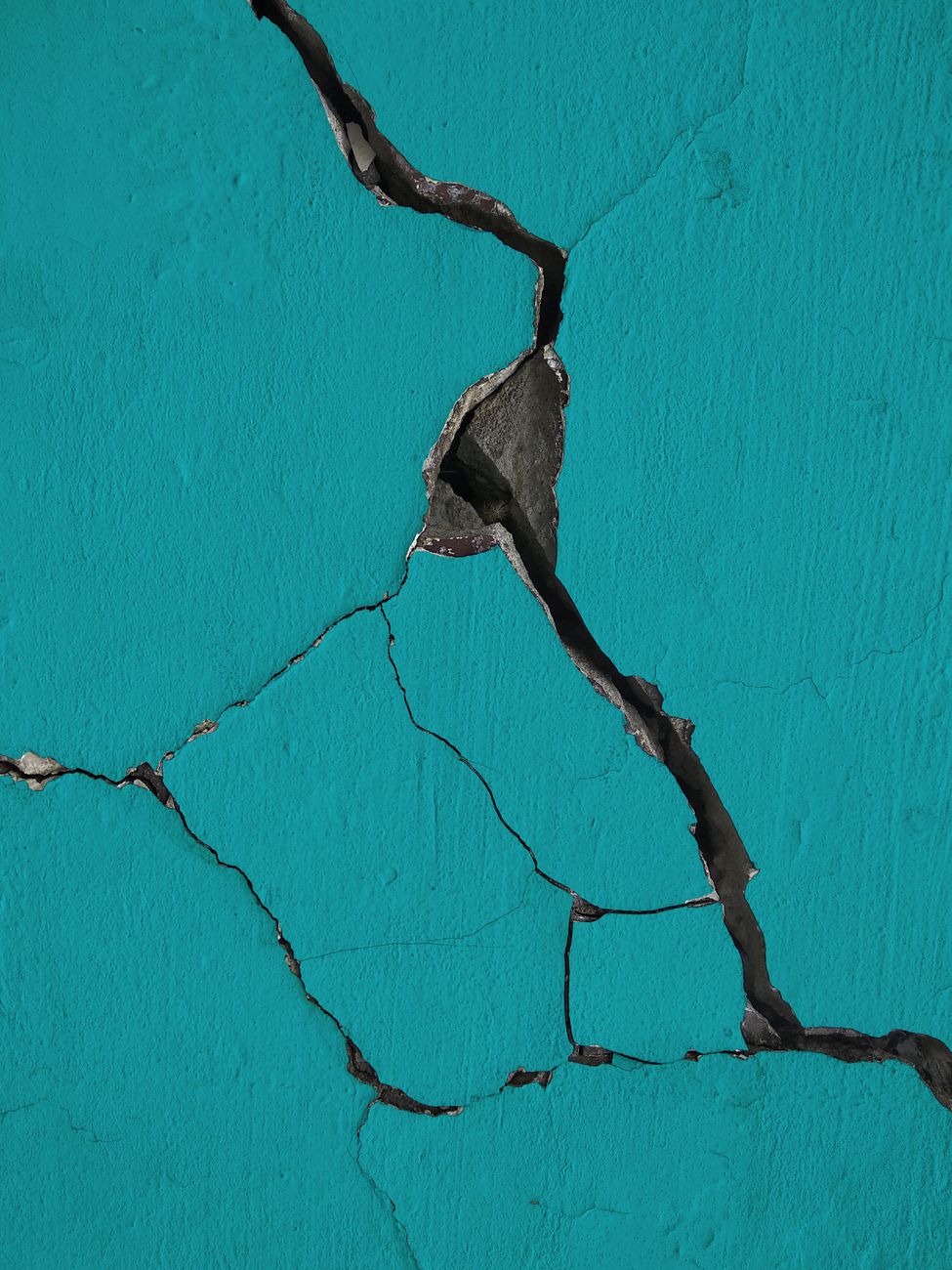
The angular distortion — the difference in settlement between two points divided by the distance between them — is the most useful measure of the potential for structural damage. For most framed structures, angular distortions greater than about 1 in 300 to 1 in 500 begin to cause architectural and structural damage. Load-bearing masonry is much more sensitive, with problems arising at angular distortions as low as 1 in 500 to 1 in 1000. Sensitive equipment, precision machinery, or processes requiring very precise levels may have tolerances orders of magnitude tighter than this.
Engineers address differential settlement in several ways. Structural design can accommodate differential movements through flexible structural systems, articulated connections, or by designing the structure to redistribute loads if one support settles more than another. Foundation design can reduce differential settlement by using a raft or mat foundation that bridges over zones of weaker ground, or by using piles to transfer load to deeper, more uniform strata. Ground improvement can be used to stiffen weak zones before construction, and careful site investigation is essential to identify zones of variable ground that might cause differential settlements.
Secondary Compression
Secondary compression (or secondary consolidation) is the settlement that continues after all excess pore pressures have dissipated and primary consolidation is complete. It occurs due to the time-dependent rearrangement of the soil fabric — the creep of the soil skeleton under sustained effective stress. Unlike primary consolidation, secondary compression is not driven by pore pressure gradients but by the viscous nature of the soil particle contacts and adsorbed water layers.
Secondary compression is most significant in highly plastic, organic, or peaty soils. Peats and organic clays can exhibit secondary compression rates far exceeding their primary consolidation settlement over decades or centuries. The Cα/Cc ratio (the ratio of secondary compression index to compression index) is a useful indicator of the relative importance of secondary compression for a given soil. In practice, secondary compression is often neglected for inorganic clays in most engineering applications, but for structures on organic soils or peat, it can dominate total settlement.
How Engineers Predict Settlement
Settlement prediction is one of the core tasks of geotechnical engineering and requires integration of site investigation data, laboratory testing, and analytical or numerical methods. The starting point is always a thorough understanding of the ground profile — the thickness, distribution, and properties of each layer that will be stressed by the applied load.
For consolidation settlement in clays, the one-dimensional approach remains standard practice. Oedometer (consolidation) tests on high-quality samples provide the key parameters — the compression index, preconsolidation pressure, and coefficient of consolidation. The oedometer test applies incremental vertical loads to a laterally confined sample and measures the time-dependent compression, allowing cv and the compressibility parameters to be determined. The quality of these results depends critically on the quality of the samples: disturbed or remoulded samples will give misleading compressibility values. In soft clays, specialised thin-walled tube samplers, piston samplers, or even in-situ tests are needed to obtain representative material.
Modern geotechnical practice increasingly uses numerical methods — finite element or finite difference analysis — to predict settlement, particularly for complex loading geometries, layered profiles, or situations where lateral deformation is significant. These tools allow the full stress-strain behaviour of the soil to be modelled, including anisotropy, the effects of construction sequence, and the interaction between structure and ground. They require sophisticated constitutive models and careful calibration against site data, but for major infrastructure projects they can provide significantly more reliable settlement predictions than simple one-dimensional methods.
Field monitoring of settlement during and after construction is equally important. Settlement plates, extensometers, and inclinometers allow actual settlements to be measured and compared with predictions. If settlement is developing faster or slower than expected, or in a pattern that differs from predictions, the field data provides an early warning and allows the design to be updated. On projects where large settlements are anticipated — embankments on soft ground, for example — staged construction with monitoring and back-analysis of observed behaviour is standard practice, allowing the ground’s response to be measured and the construction programme adjusted accordingly. Settlement is ultimately something that engineers predict in advance and then manage through the life of a project, recognising that the ground always has the final word.
 Bridge & Bedrock
Leave a comment